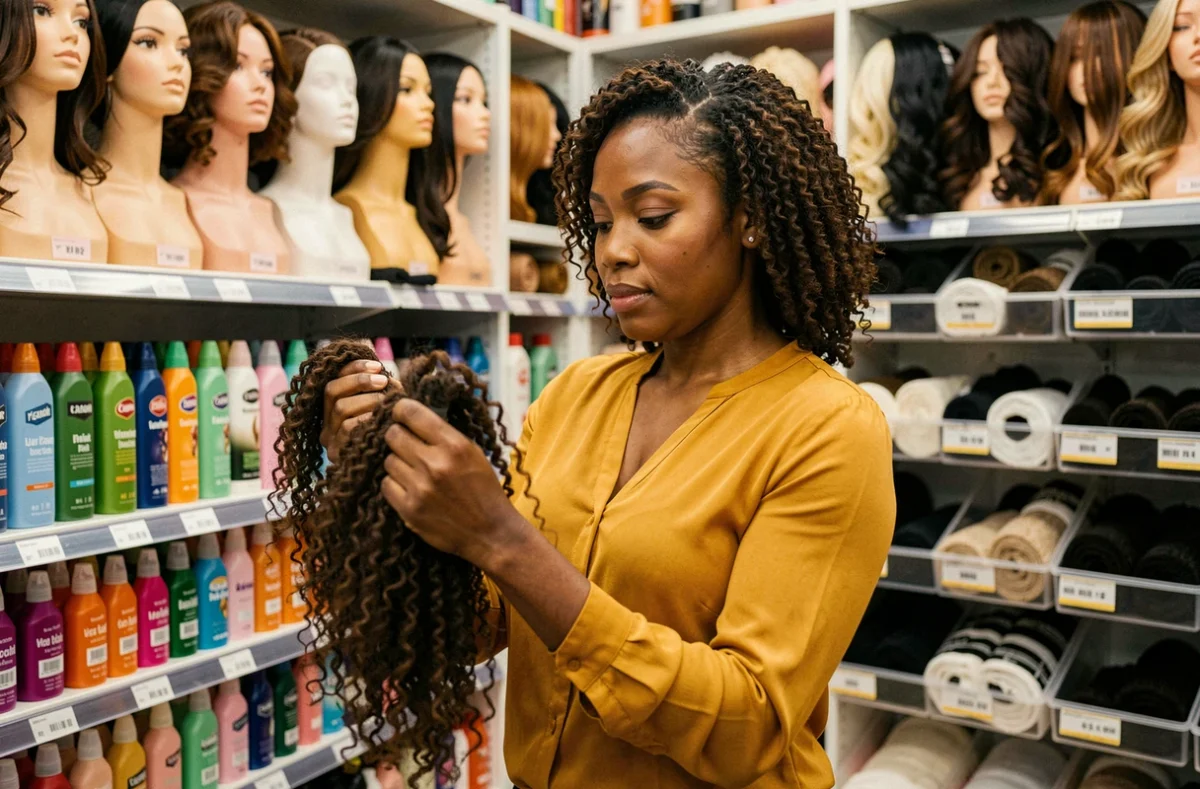
When you enter an afro hair extensions shop, you come across dozens of packets with similar names, textures that look alike, and prices that vary from simple to triple. Choosing a reliable afro hair extensions store starts with being able to spot the concrete signals that separate a serious retailer from a dubious seller. These signals are not always visible at first glance, but they can be checked in a few minutes either on-site or online.
Traceability of afro hair extensions and compliance with European regulations
When you push open the door of a store, the first thing to check is not the color of the extensions or the displayed price. It’s the seller’s ability to answer a simple question: where do these extensions come from, and what are they treated with?
A good afro hair extensions store displays or provides upon request the technical data sheets and EU compliance certificates for its products. Since Regulation (EU) 2026/909, several substances used in hair products (HC Blue No. 18, HC Yellow No. 16, HC Red No. 18, certain aluminum or zinc compounds) are formally restricted or prohibited, with a compliance deadline of January 1, 2027, for market placement.
Specifically, if the seller cannot answer when asked whether their extensions contain formaldehyde or fragrance allergens subject to labeling, that’s a warning signal. Regulation (EU) 2023/1545 now requires the labeling of an expanded number of fragrance allergens, which directly concerns scented extensions, oil treatments, and leave-ins often sold as complements.
You can also discover SOS Beauté online to identify the criteria that distinguish a reliable shop from a point of sale without guarantees on its supplies.
Natural or synthetic extensions: what the store should be able to explain
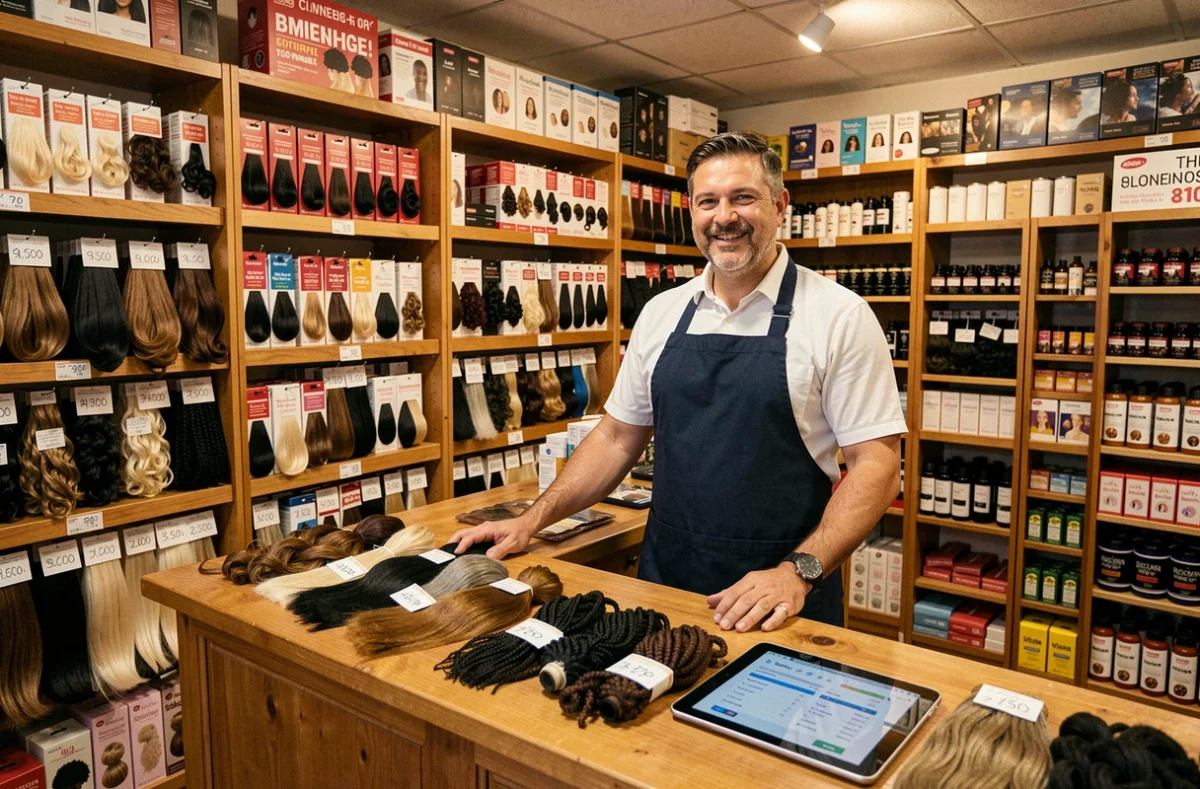
A serious retailer does not just sort their extensions by length and color. They clearly distinguish the ranges and can guide customers based on the type of hairstyle intended.
Natural remy hair and synthetic alternatives
Extensions made from natural so-called remy hair keep their cuticles aligned in the same direction, which reduces tangling and prolongs the lifespan of the weave. High-quality synthetic extensions mimic the texture but cannot withstand the same thermal treatments. A seller who confuses these two categories does not know their stock.
In-store, three points should be checked:
- The labeling clearly mentions the origin (natural or synthetic) and the quality grade, not just a marketing name
- The seller can explain the difference in durability between natural Brazilian weaves and high-temperature synthetic extensions
- The maintenance products offered on the shelf are suitable for each type of extension, not just a generic shampoo for all
Extensions for braids, weaves, or thread extensions
Each application technique requires a different type of extension. A store that sells extensions for African braids in the same aisle as clip-in extensions without distinguishing between weight or texture does not facilitate choice. The clear segmentation of products by use (braids, weaves, crochet braids, extensions) is an indicator of professionalism.
Range of afro hair care products and in-store advice
Extensions do not last long without proper care. A competent afro hair extensions shop also offers a selection of hair care products suitable for curly hair and installed extensions.
Check if the care section contains products that are sulfate-free and free from harsh petrochemical substances. Afro hair, which is naturally dry and brittle, reacts poorly to stripping formulations. A good store offers moisturizing ranges (gel, balm, leave-in spray) in addition to the extensions, not just application accessories.
Personalized advice makes a difference. A seller who asks about hair porosity, the type of hairstyle considered, and washing frequency before recommending a product demonstrates real on-the-ground knowledge. Feedback varies on this point depending on the stores, but a store that asks no questions before selling a care product does not offer advice; it is just clearing stock.
Pricing policy and transparency in an afro hair extensions shop
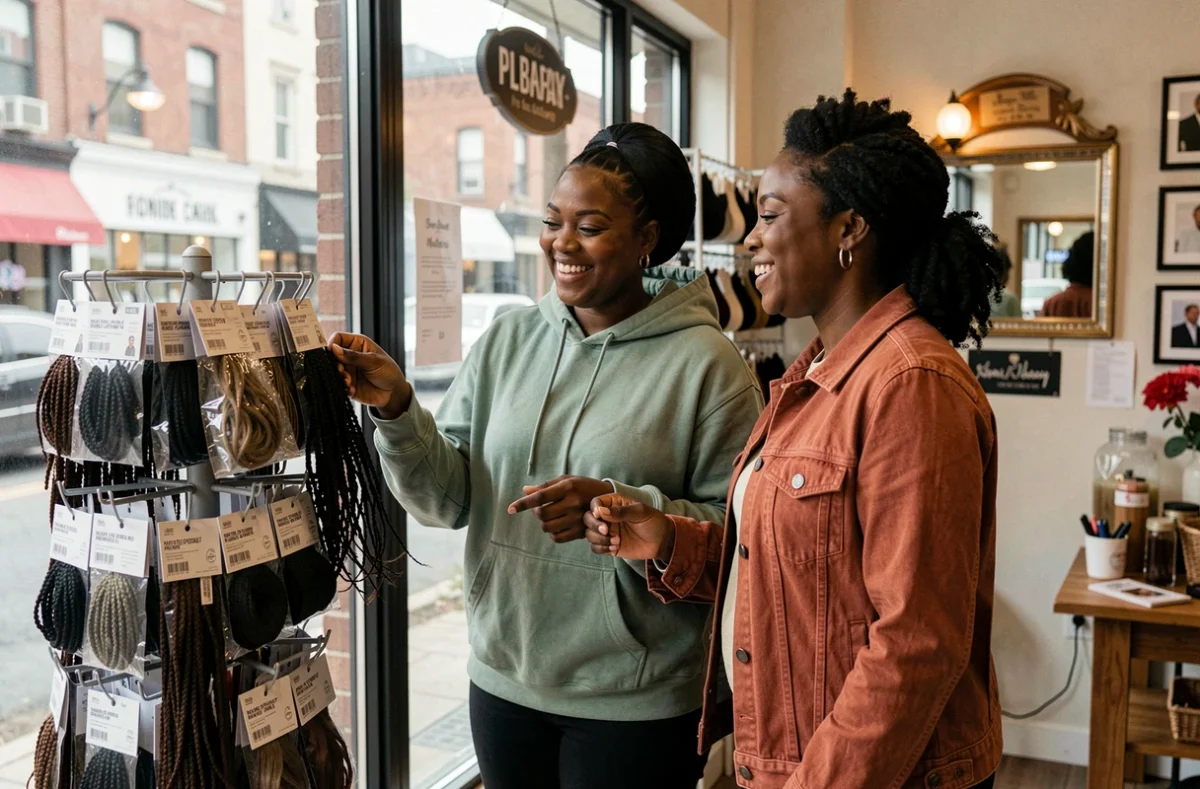
Price is often the first selection criterion, but it should never be the only one. A price difference between two packets of seemingly identical extensions almost always indicates a difference in quality, origin, or chemical treatment.
Signals to look out for:
- Prices are displayed visibly, with the price per gram or per extension, not just per packet
- The store can justify a higher price by the source, compliance certificate, or grade of the natural hair
- Promotions do not systematically concern end-of-stock items without a visible expiration date on the associated care products
- Customer reviews (online or word-of-mouth) confirm the consistency of quality, not just the low price
An abnormally low price on natural extensions should raise a red flag, as the actual production cost of remy hair excludes certain price ranges.
Online presence and reputation of the afro hair extensions shop
A reliable store does not hide behind a metal curtain. Its online presence (website, social media, Google listings) allows for checking several elements before visiting.
Look at recent customer reviews, the regularity of posts, and the quality of responses to questions asked in comments. A store that publishes application tutorials, texture comparisons, or information on new hair regulations shows that it is keeping up with its market.
The consistency between what is displayed online and what is found in-store is a simple test. If the website advertises Brazilian extensions grade 10A and the seller on-site does not know what that classification means, the digital showcase serves more as a facade than a guarantee.
Recognizing a good afro hair extensions shop relies on concrete checks: product traceability, compliance with recent European standards, clear segmentation of the offer by hairstyle type, and transparency on prices. A seller who answers technical questions about their extensions and hair care without hesitation deserves a return visit.