Brittany attracts new residents every year, but this appeal is not limited to postcards of wild coastlines. Behind the natural setting, there are economic realities, a solid job market, and a still accessible cost of living that explain why the region is so attractive. Understanding these concrete mechanisms allows one to grasp what it truly means to settle in this western part of France.
The Breton investment wall: when attractiveness puts the region under pressure
Have you ever noticed that a sought-after neighborhood eventually becomes a victim of its own success? Brittany is experiencing exactly this phenomenon, but on the scale of an entire region. The work presented at the Breton Economic Forum 2026 in Saint-Malo identifies three major constraints: housing, land, and mobility.
Specifically, the influx of newcomers is pushing local authorities to accelerate investments. Business zones lack available land. Transportation routes become congested during peak hours around Rennes and along the coast. Some economic players speak of a real “investment wall” that must be overcome to prevent the quality of life in Brittany from deteriorating.
This observation does not make Brittany any less attractive. It means that those considering living in Brittany with Destination Brittany would benefit from choosing their city while taking these local tensions into account, rather than just targeting the most in-demand areas.
Cost of living in Brittany: what prices really say
The daily cost remains one of the most concrete arguments in favor of the region. Breton real estate, although rising in recent years, is still significantly below the prices found in Île-de-France or on the Côte d’Azur.
Real estate: significant disparities between cities
Rennes, the regional capital, has the highest prices in Brittany. Brest, Lorient, or Saint-Brieuc offer significantly lower levels. Buying in Brest costs significantly less than in Rennes, for comparable access to services and employment.
Vannes and Saint-Malo, highly sought after for their coastal setting, are seeing their prices rise. The choice of city thus heavily influences the housing budget. A successful relocation project requires a thorough analysis of the local market, not just the overall image of Brittany.
Current expenses: a rather favorable basket
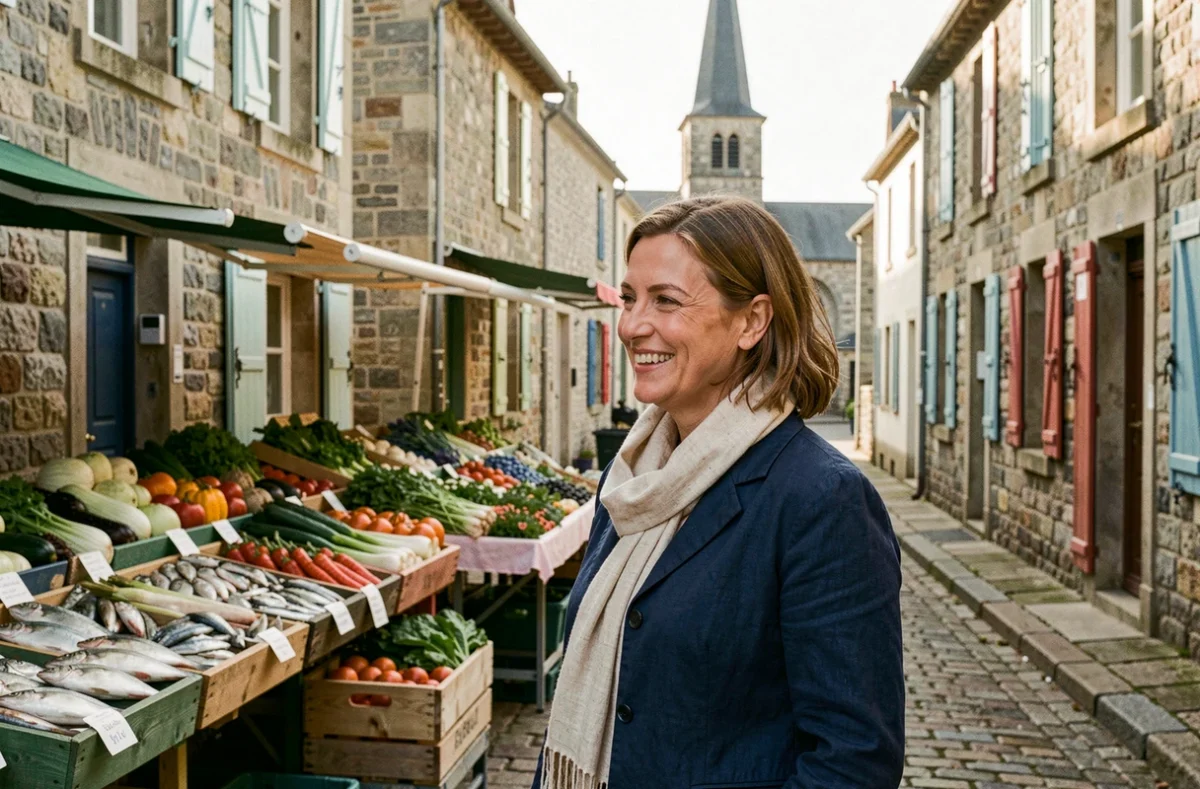
Beyond housing, food expenses benefit from proximity to agricultural and maritime sectors. Short supply chains, local markets, and cooperatives are plentiful. The proximity of producers reduces part of the food budget compared to large metropolitan areas.
Transportation, on the other hand, deserves attention. Outside of Rennes (which has a metro), daily life often relies on cars. This expense offsets some of the savings made on housing.
Breton job market: sectors hiring beyond tourism
The image of Brittany solely relying on tourism and fishing is outdated. The region has one of the lowest unemployment rates in France, supported by a sectoral diversity that few territories can claim.
Why this robustness? Because the Breton economy is based on several complementary pillars:
- Agribusiness, the region’s leading industrial sector, which employs in processing, logistics, and research
- Industry (shipbuilding in Lorient and Brest, telecommunications in Lannion, cybersecurity in Rennes)
- Services, particularly digital, which are developing strongly around the Rennes metropolitan area and in medium-sized towns
This diversity protects the region from sectoral shocks. When one area slows down, the others maintain local dynamism. This is a structural advantage for anyone seeking professional stability when relocating.

Quality of life in Brittany: beyond the natural setting, a dense social fabric
The cross-study of citizens and leaders published by Forvis Mazars on the occasion of the Breton Economic Forum 2026 confirms a point often underestimated. The majority of Breton leaders find the quality of life for their employees satisfactory. Citizens, for their part, describe a strong sense of belonging and quality human relationships.
This associative and cultural fabric is far from anecdotal. Festivals (music, literature, cinema) punctuate the year in cities like Lorient, Rennes, or Brest. Breton heritage, from the parish enclosures of Finistère to the ramparts of Saint-Malo, nourishes an identity that facilitates the integration of newcomers.
Human-scale cities: a concrete advantage
Rennes exceeds 200,000 inhabitants, but most Breton cities remain human-sized. Vannes, Quimper, Saint-Brieuc, or Lorient offer short commute times. Less than 30 minutes of daily commuting in most medium-sized towns radically changes the relationship with free time.
This more relaxed pace largely compensates for a cultural or commercial offering that is less dense than in Paris. For families, access to schools and healthcare services is often smoother than in large urban areas.
Staying realistic about the limits to make the right choice
Brittany’s attractiveness should not obscure real trade-offs. Mobility remains an issue: the rail network serves Rennes and the northern coast well, but some inland areas (Côtes-d’Armor, central Finistère) rely heavily on cars.
Housing in the most sought-after areas is tightening. Young Breton professionals sometimes struggle to find housing in coastal municipalities where tourist demand drives up prices. Local authorities are aware of this, but solutions (construction, densification) take time.
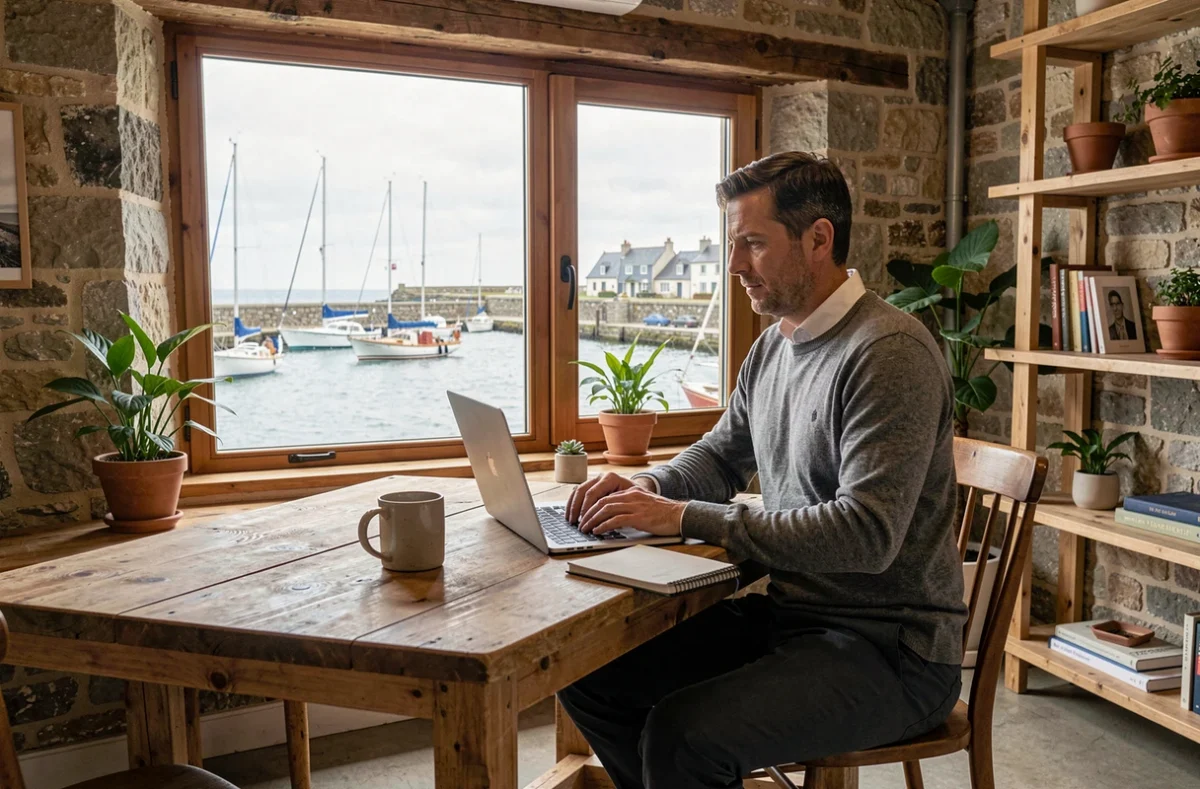
Choosing Brittany means targeting the right city according to one’s profile. A remote worker does not have the same constraints as an employee in the shipbuilding sector. A retiree seeking tranquility has different needs than a family with young children. The diversity of Breton territories is an asset, provided it is exploited methodically rather than just aiming for postcards.