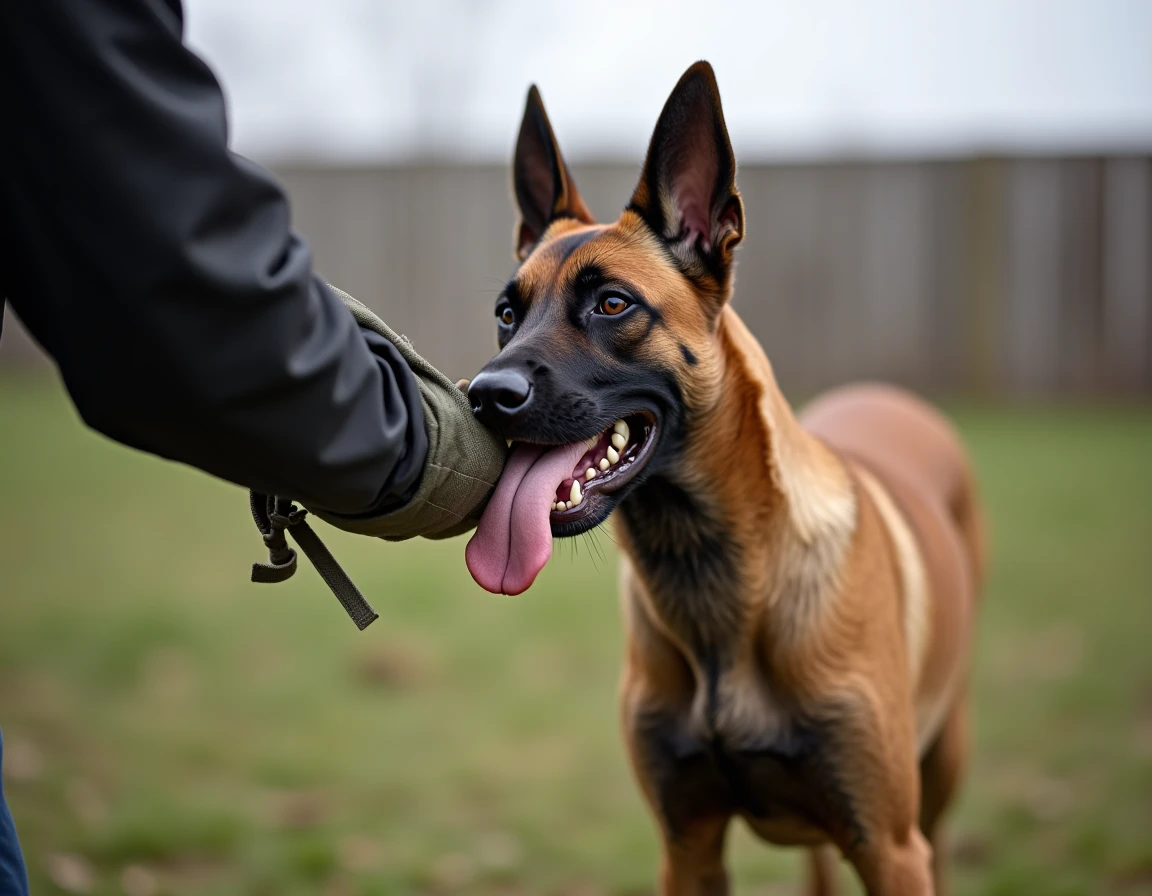
The Malinois carries a reputation as a dog with a formidable jaw. On social media, videos of biting and PSI rankings circulate endlessly, placing the breed among the most powerful. This image shapes purchasing decisions, training methods, and even insurers’ perception of risk. The subject deserves a more sober examination than the spectacular figures that dominate online conversation.
Malinois jaw pressure: what the measurements really say
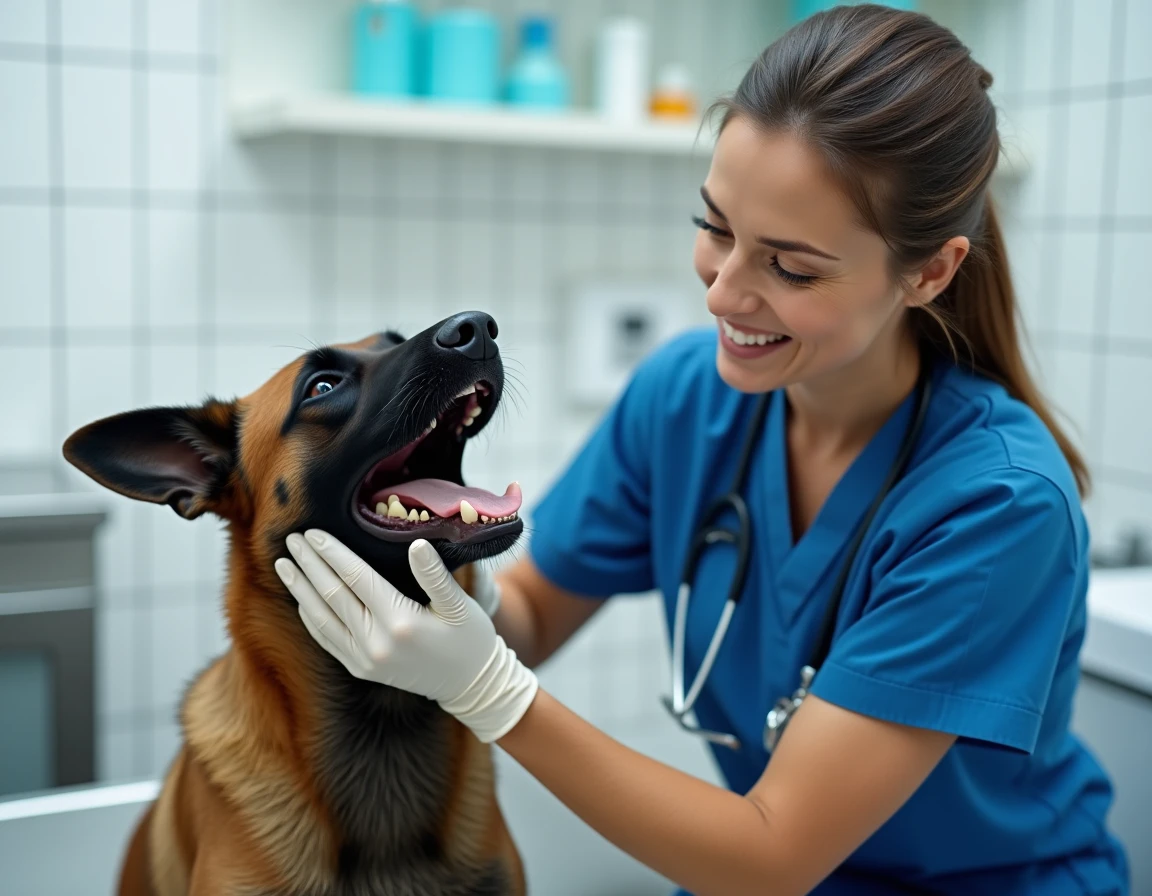
The PSI values attributed to the Malinois vary greatly from source to source. Some sites present estimates close to those of the German Shepherd, while others inflate them without citing a measurement protocol. The available data does not allow for a conclusion on a single reliable figure.
The problem lies in the method. Measuring a dog’s bite pressure requires a sleeve equipped with sensors, a motivated animal, and a reproducible context. Testing conditions (stress, motivation, bite angle) radically alter the result. Comparing the human jaw, estimated between 120 and 140 PSI according to Mag du Chien Ouest-France, to that of a working dog biting on a sleeve has only indicative value.
To better understand the strength of the Malinois jaw, one must go beyond the raw number and look at what happens upstream: cranial morphology, grip type, and the dog’s nerve control.
Cranial morphology and bloodlines: why talking about the Malinois as a block doesn’t hold
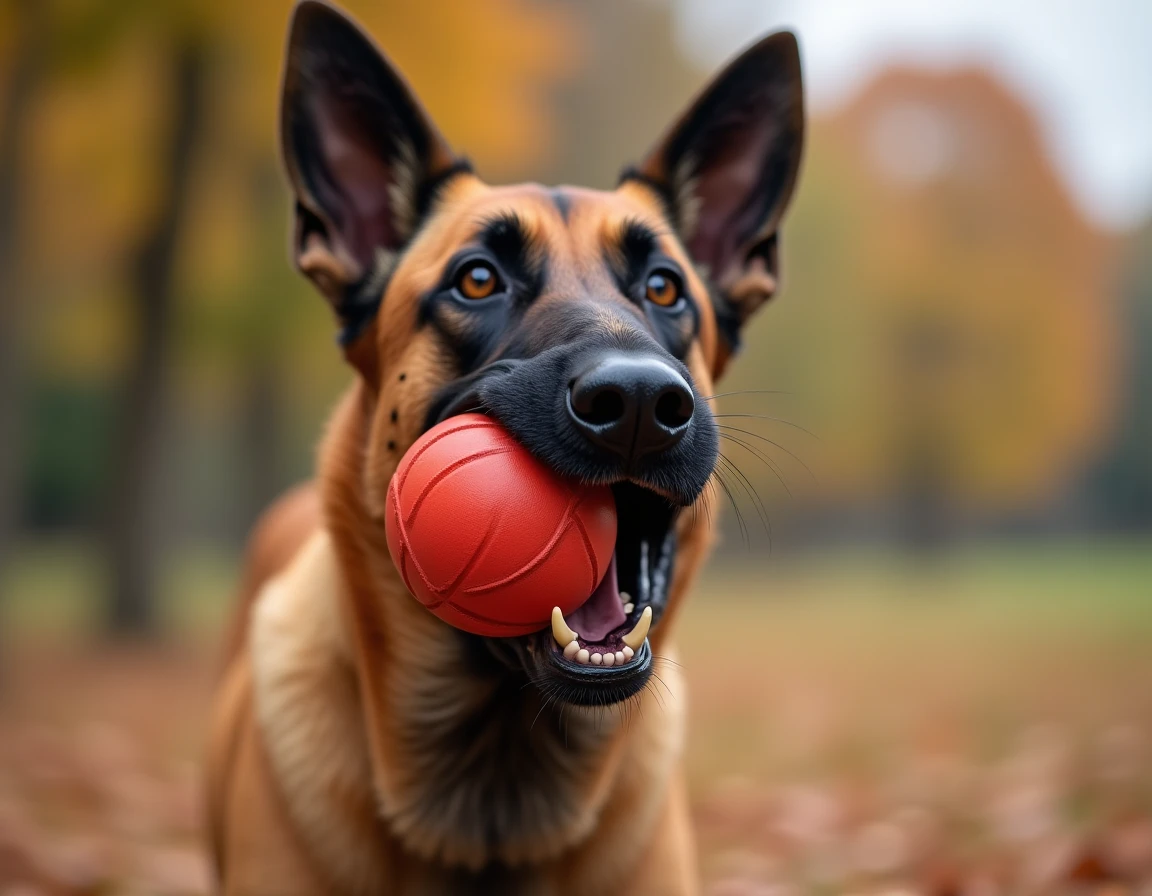
Cranial and mandibular morphology varies greatly among Malinois bloodlines. A dog from a working line (ring, KNPV) often has a shorter muzzle, a wider jaw, and different muscle insertions compared to a show or beauty line subject. This intra-breed variability directly affects grip capability.
Popular articles overlook this distinction. They treat the Malinois as a homogeneous entity, with a single PSI score applicable to all individuals. This is a simplification that fuels the myth of uniform brute strength.
In reality, the quality of the grip matters more than brute strength. In bite sports and ring work, trainers and judges evaluate full mouth grip, calmness during the hold, and the dog’s ability to maintain its grip over time. A Malinois that bites with a full mouth and stable nerve control is judged to perform better than one that bites hard but releases under stress.
The myth of the super-powered jaw and its concrete effects on breeding
The fascination with bite pressure numbers is not confined to forums. It influences concrete decisions, sometimes problematically.
- Some breeders select breeders based on perceived “power” criteria (wide head, short muzzle) without assessing nerve balance or sociability, which can produce unstable puppies
- Buyers choose a Malinois for its reputation as a dog with a fearsome bite, without measuring the breed’s requirements for mental stimulation and daily exercise
- Coercive training methods are justified by the idea that a dog “as powerful” requires a heavy hand, whereas the Malinois responds better to work based on motivation and channeling
These deviations produce poorly socialized dogs placed in unsuitable environments. The result: abandonment, bite incidents, and increased stigmatization of the breed.
Malinois bites and danger: what behavior specialists say
Canine behavior specialists and some animal protection associations remind us of a fundamental point: there is no simple correlation between jaw strength and actual danger. A Kangal has a bite pressure much higher than that of a Malinois, but the frequency of serious incidents depends on other factors.
Early socialization, daily management by the owner, and the context of use (family, private security, sport) weigh much more heavily than the mechanical strength of the jaw. A properly socialized Malinois, guided by a trained owner, poses a low risk, regardless of its theoretical bite pressure.
On the other hand, a dog of any breed, deprived of socialization and subjected to inappropriate training methods, poses a danger. The problem lies with humans, not the jaw.
Education and socialization of the Malinois: the real safety criteria
Rather than focusing on PSI, prospective owners would benefit from evaluating three elements before acquiring a Malinois.
The first concerns the breeder. A serious breeder tests the nerve balance of their breeders, socializes puppies from the first weeks, and refuses to sell to an unprepared buyer. A well-selected puppy based on behavioral criteria is worth more than a puppy chosen for the width of its head.
The second concerns the environment. The Malinois needs daily physical and mental stimulation. An apartment without regular activity generates frustration and destructive behaviors, regardless of the strength of its jaw.
The third concerns the owner’s training. Working with a competent dog trainer, prioritizing positive reinforcement, and understanding the dog’s communication signals drastically reduce the risk of incidents.
The power of the Malinois jaw remains a fascinating subject anatomically. It should never be the criterion that motivates the purchase of a dog, nor the one that justifies a training method. Field feedback converges on one point: a balanced Malinois is built through socialization and education, not by selection based on brute strength.