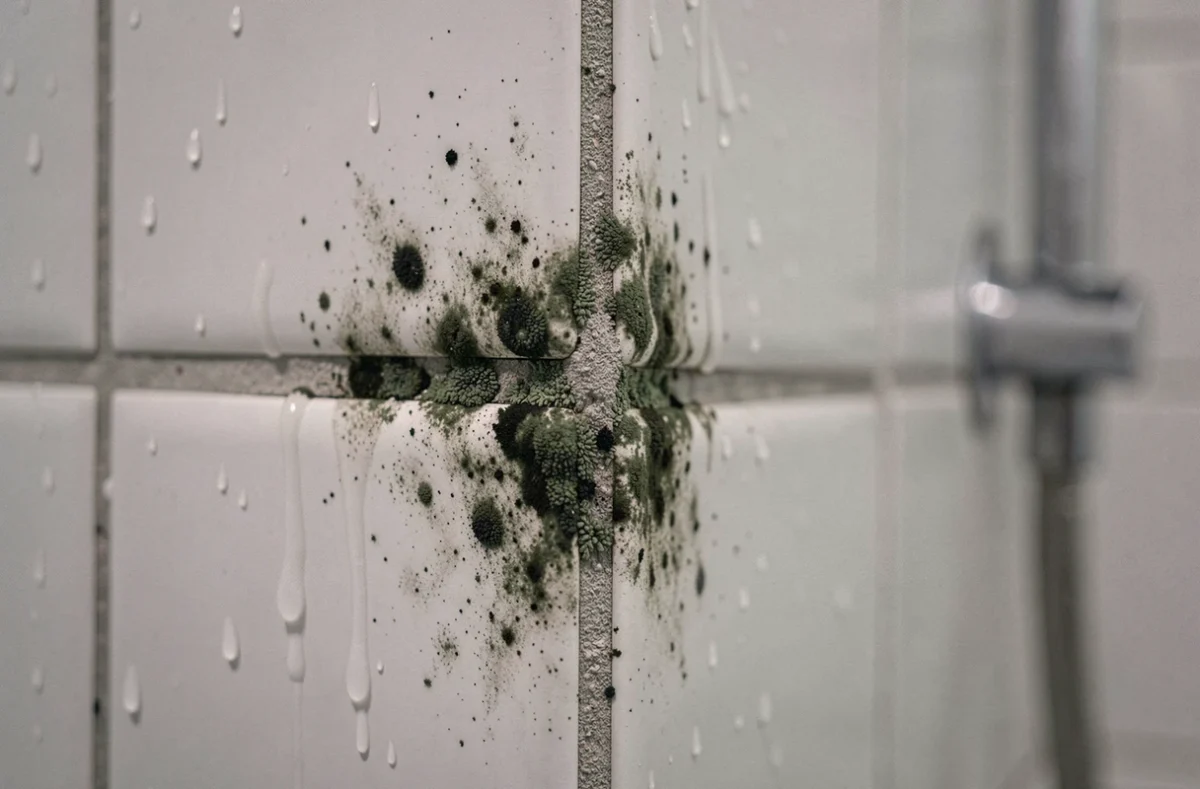
A dark stain in the corner of the wall, just above the shower tray, that reappears two weeks after a vinegar cleaning: this is a sign that the problem of mold on the bathroom walls goes beyond simple surface maintenance. Before scrubbing again, it’s worth taking the time to find out why the mold is settling in, not just how to remove it.
Mold that returns after cleaning: test the ventilation first
You clean the joints, apply an antifungal product, and three weeks later the black stains reappear. This scenario almost always points to a lack of air renewal, not a poor choice of product.
The bathroom concentrates steam in a small volume. For humidity to escape, air must enter from the living areas (grilles in the windows or wall air inlets), circulate under the door, and then be extracted by the extraction vent. If any step in this process is blocked, humidity stagnates.
An extraction vent that seems clean may very well be drawing in too little air. Air inlets in adjacent rooms are sometimes deliberately blocked to limit cold or noise, which disrupts the circuit. You can check the suction by bringing a piece of paper close to the extraction vent: if it doesn’t stick, the airflow is insufficient.
This test gives an indication, but only a flow measurement conducted by a technician provides a reliable diagnosis.
To go further in the diagnostic and treatment process, the Maison Créa guide details each step from identifying the cause to restoring the wall.
Bathroom without a window: a special case
The absence of a window does not condemn a wet room to mold. A properly functioning mechanical extraction system is enough to maintain an acceptable humidity level. However, opening the window after a shower does not replace permanent ventilation when the housing needs it: air enters for a few minutes, then the humidity level rises again as soon as it closes.
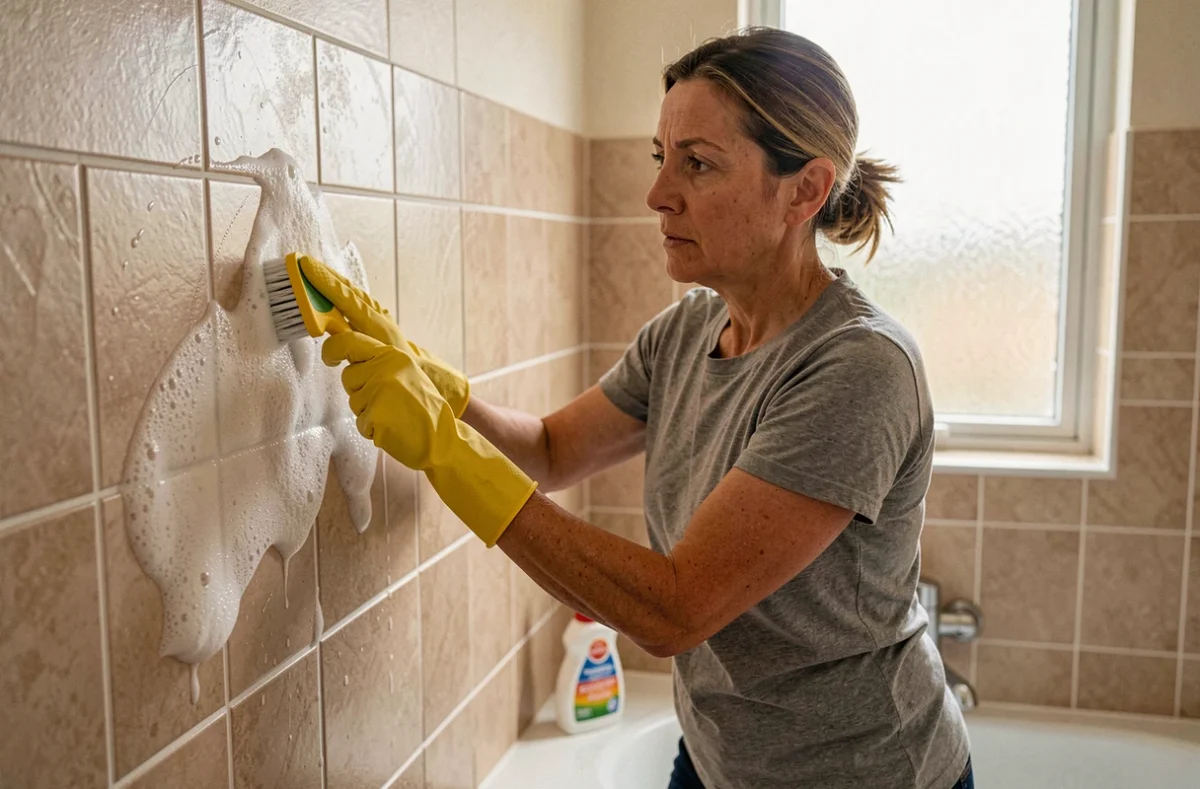
Cleaning mold from a bathroom wall: method according to the surface
Not all bathroom walls react the same way to cleaning. Glazed tiles can withstand products that painted plaster or bare plaster cannot tolerate.
Tiles and joints: white vinegar then baking soda
On tiles, mold mainly settles in the porous joints. The most effective method remains direct application:
- Spray pure white vinegar on the blackened joints, let it sit for about thirty minutes, then scrub with a stiff brush.
- For stubborn stains, apply a paste of damp baking soda to the joint, let it sit, then rinse with clear water.
- Dry the surface immediately after rinsing to avoid reintroducing the humidity that has just been fought.
Scrubbing a joint without drying it afterward negates part of the work. Residual water in the porous joint recreates favorable conditions for spores within a few days.
Painted or coated wall: do not scrape dry
On a painted wall, mold often penetrates the coating layer. Scraping dry disperses spores into the room air. First, moisten the area with a cloth soaked in diluted white vinegar, then gently scrub. If the stain penetrates the paint and darkens the coating deeply, a simple surface cleaning is not enough: the degraded coating must be scraped, the surface treated with an antifungal product, and then refinishing must be done.
Differentiating surface mold from structural building issues
The question that few guides address concretely: when does cleaning become useless without intervention on the building?
Surface mold appears in areas exposed to steam (shower edges, ceiling above the bathtub) and disappears permanently after a good cleaning combined with improved ventilation. It remains confined to the finishing layer.
A structural problem manifests differently:
- The stain returns to the same spot in less than a month despite a thorough cleaning and functional ventilation.
- The wall remains damp to the touch even after several hours without water use in the room.
- The coating peels or swells, a sign that humidity is coming from inside the wall (concealed leak, infiltration, thermal bridge).
- Mold spreads over a larger area than the zone directly exposed to water.
Repainting over mold related to infiltration only masks the problem for a few weeks. Water continues to migrate into the wall, and the paint bubbles again. In this case, the cause (leak, waterproofing defect, rising damp) should be investigated before doing anything else.
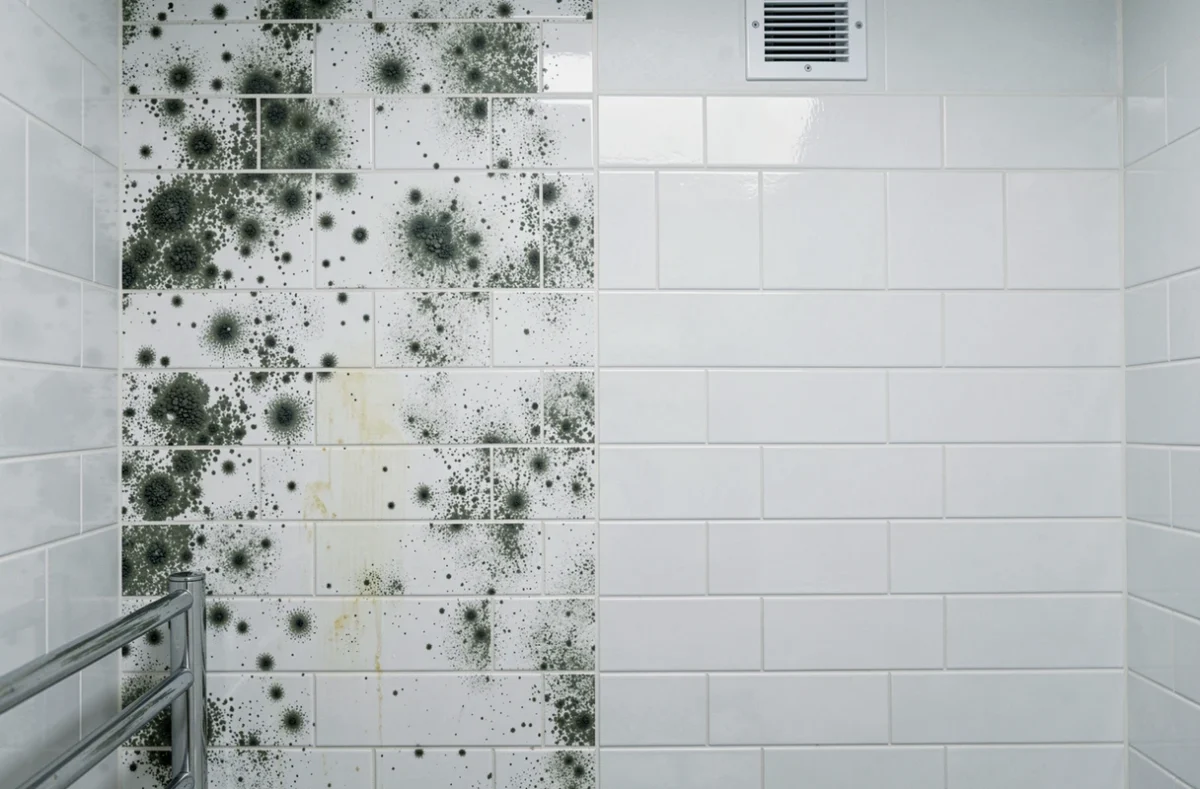
Sustainable mold prevention in the bathroom: the gestures that really make a difference
Prevention relies less on products than on habits that reduce the amount of residual steam after each use.
Leaving the bathroom door ajar after a shower speeds up air renewal, provided the mechanical extraction system is running. Wiping down the shower walls with a squeegee takes thirty seconds and removes most of the water that would otherwise evaporate slowly and maintain a high humidity level for hours.
Silicone joints have a limited lifespan. When they darken deeply and cleaning no longer restores their original color, replacing them is inexpensive and eliminates a permanent reservoir of spores. The old joint is removed with a cutter, the surface is cleaned with vinegar, left to dry for a day, and then a line of antifungal silicone is reapplied.
In rental properties: who does what
Routine maintenance (cleaning vents, replacing joints, ventilation) is the tenant’s responsibility. However, a malfunctioning extraction system, a waterproofing defect, or an insulation problem falls to the landlord. Reporting the problem in writing, with supporting photos, helps document the situation if mold persists despite regular maintenance.
Eliminating mold from a bathroom wall ultimately comes down to two steps: treating the surface with the right product suitable for the surface, then removing the source of humidity that feeds the return of spores. Without this second step, cleaning remains a task to be repeated indefinitely.