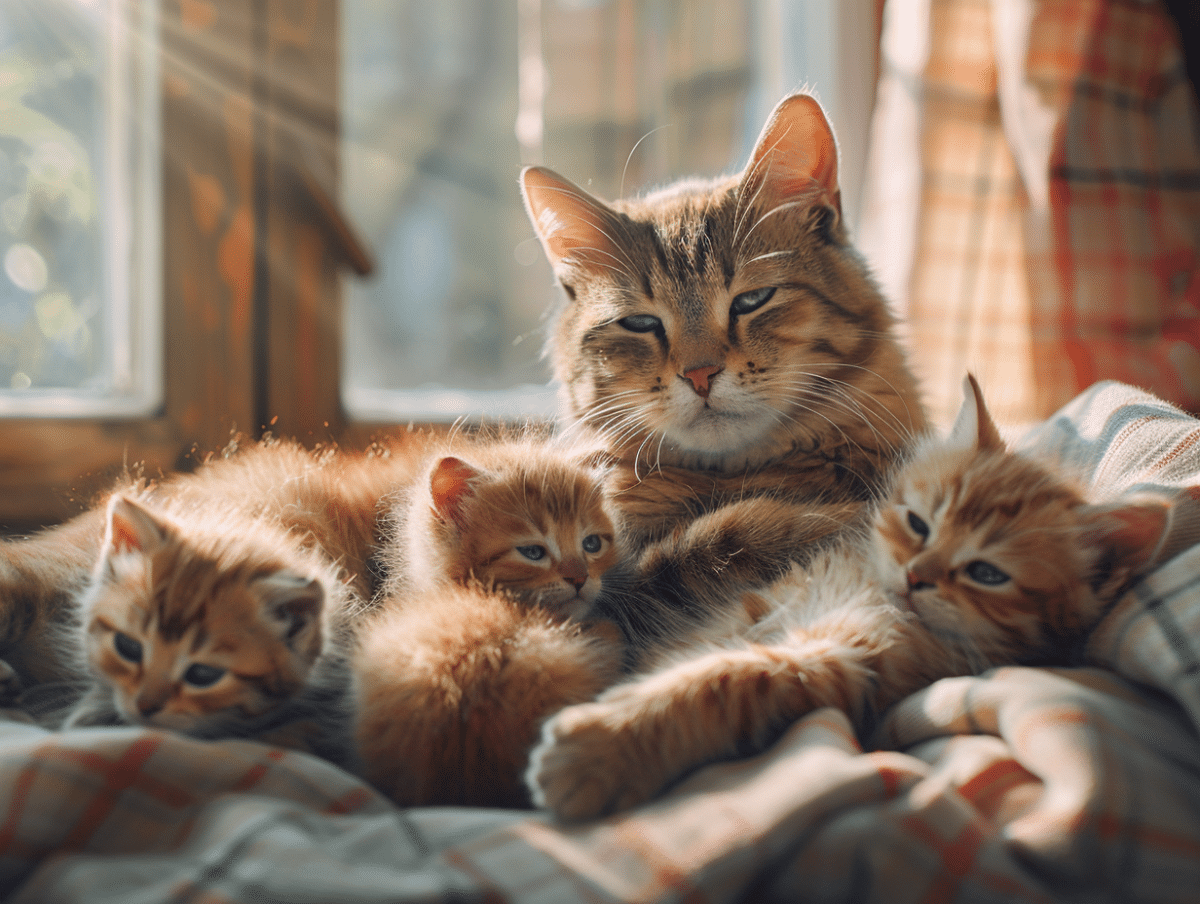
The first weeks of a kitten’s life are crucial for its physical and emotional development. Nutrition plays a vital role, with a preference for maternal milk that provides all the necessary nutrients. Veterinary care, including initial vaccinations and deworming, is also essential. Around the eighth week, the question of separation from the mother arises. This step must be handled delicately to minimize the kitten’s stress and promote its adaptation to a new environment, ensuring a smooth transition to an independent and healthy life.
The first steps in kitten feeding: from nursing to weaning
In the early moments of its life, the kitten feeds exclusively on maternal milk, an unparalleled source of nutrients tailored to its needs. However, certain circumstances may necessitate substituting maternal milk with formula milk, never cow’s milk, which is unsuitable for the kitten due to its different composition. Specific preparations available on the market can then compensate for the absence of natural nursing. Kittens in this situation are fed with a bottle, meticulously measured and suited to their small mouths.
The question often arises: How long can a kitten stay without its mother? In truth, weaning, or the transition to solid food, generally begins between the third and fourth week. This gradual process allows the digestive system of the kitten to adapt. The introduction of solid food, often in the form of pâté or specially designed kibble for young felines, occurs progressively, alongside a decrease in nursing frequency.
Weaning is usually completed around 7 weeks. At this stage, the kitten is capable of feeding independently without the intake of maternal milk or its substitute. It is important to ensure that the dietary transition is smooth to avoid any digestive issues that could affect the young animal’s health. Specialized brands like Royal Canin offer ranges suited to this critical period, and consulting a veterinarian for personalized advice is highly recommended to best support the kitten’s development.
Essential care and managing maternal separation
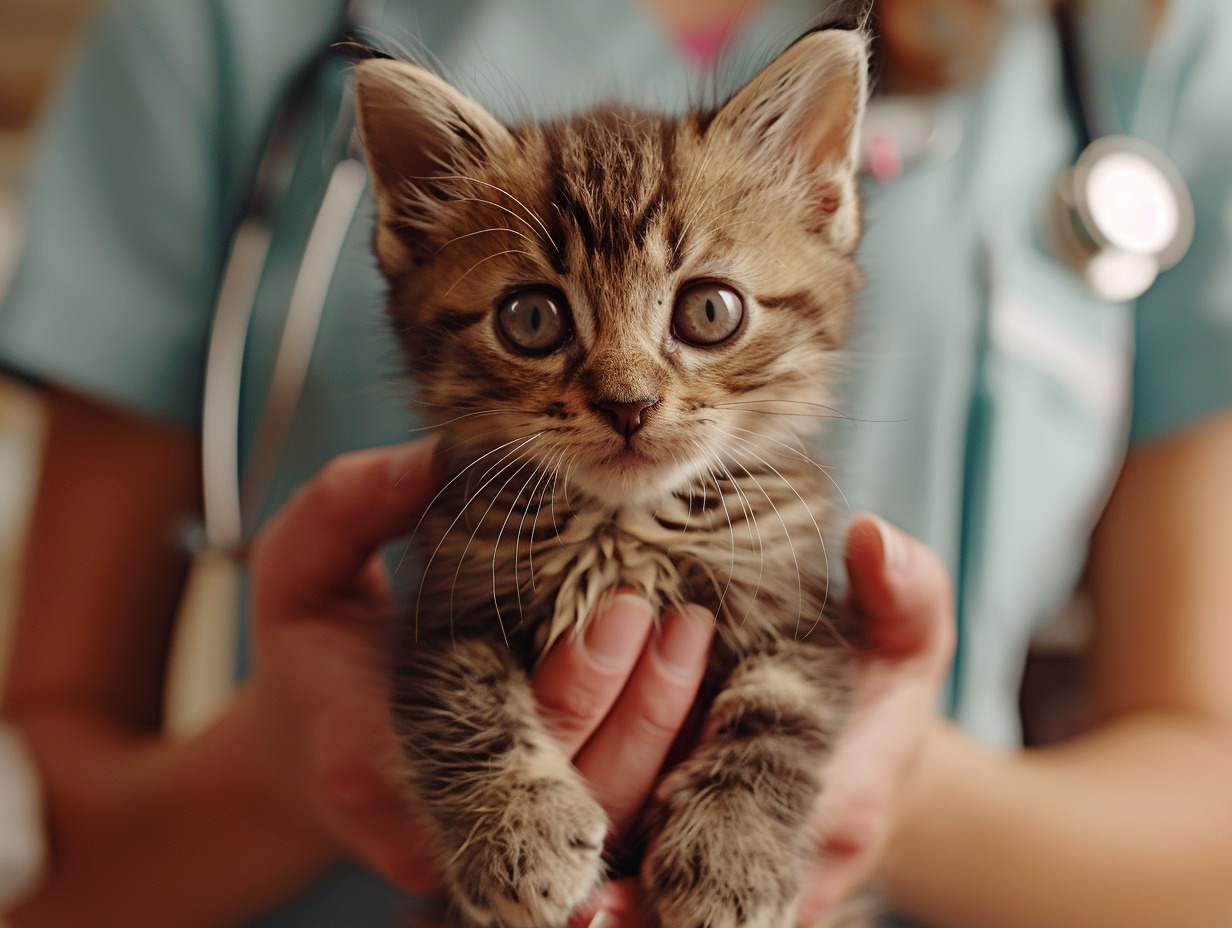
Raising a kitten requires special attention, especially regarding basic veterinary care. Vaccinations, deworming, and routine check-ups form the triad of maintaining the health of these young felines. Consulting a veterinarian from the first weeks is recommended to establish an appropriate care protocol and anticipate potential health issues. Dr. Bénédicte Hivin, a specialist in the field, emphasizes the importance of initial check-ups and the establishment of a health record as soon as the kitten arrives in its new home.
The separation between the kitten and its mother is a delicate stage that must be managed carefully. Indeed, the law states that a kitten cannot be given away or sold before the age of 8 weeks, a period deemed necessary for its social and emotional development. During this phase, kittens learn social behaviors and the codes of feline life through interaction with their mother and siblings. Rushing this separation can lead to behavioral issues in the young animal.
The choice of post-weaning nutrition is fundamental for the harmonious growth of the kitten. Brands like Royal Canin offer suitable products that meet the specific nutritional needs of this life stage. Guidance from a veterinarian, such as that provided by Dr. Bénédicte Hivin, is essential to adjust the kitten’s diet, avoiding excesses or deficiencies that could harm its development.
In terms of training and acclimatization to the environment, the first weeks of the kitten are decisive. Teaching it to use its litter box, to interact with humans and other pets, and to get used to the various stimuli in its environment are all part of the necessary support to ensure psychological and behavioral balance. Owners must therefore be informed and prepared for this adaptation period, which will lay the foundation for the relationship between the animal and its surroundings.