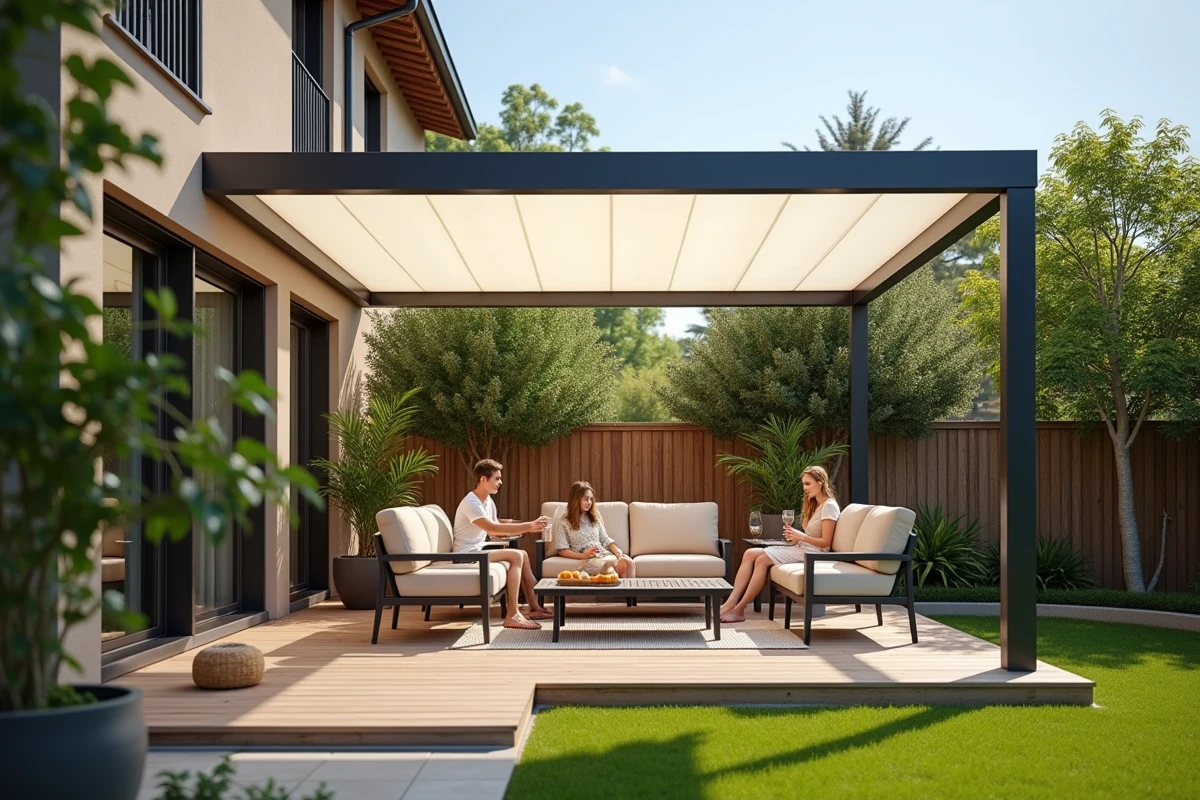
Under a south-facing polycarbonate pergola, a striking temperature difference can be measured between the sheltered space and the outside as early as June. Polycarbonate allows light to pass through, but it also traps some of the infrared radiation, turning the pergola into a mini-greenhouse. Several methods exist to limit this overheating, and some combine better than others depending on the orientation and type of panels installed.
Solar film on polycarbonate: the solution for renovations
When you already have a pergola installed and refuse to take it all apart, solar film remains the most straightforward option. The Dimexact product, available at Castorama, is a white solar film designed for polycarbonate and plexiglass roofs. It is applied to the outer face of the panels, including ribbed or honeycomb types.
The ADEME classifies solar films installed on translucent plastic roofs among the solutions with high efficiency against summer overheating. The report “Adapting to Heat Waves” (2023 edition) mentions them for existing buildings, which includes residential pergolas.
Installation requires a clean, dry surface, and moderate outdoor temperature (avoiding heatwave days, specifically). A poorly applied film will bubble and peel off within weeks. On honeycomb panels, it is essential to follow the ribs and work in regular strips to avoid creases.
Color and opacity of panels: a choice made before installation
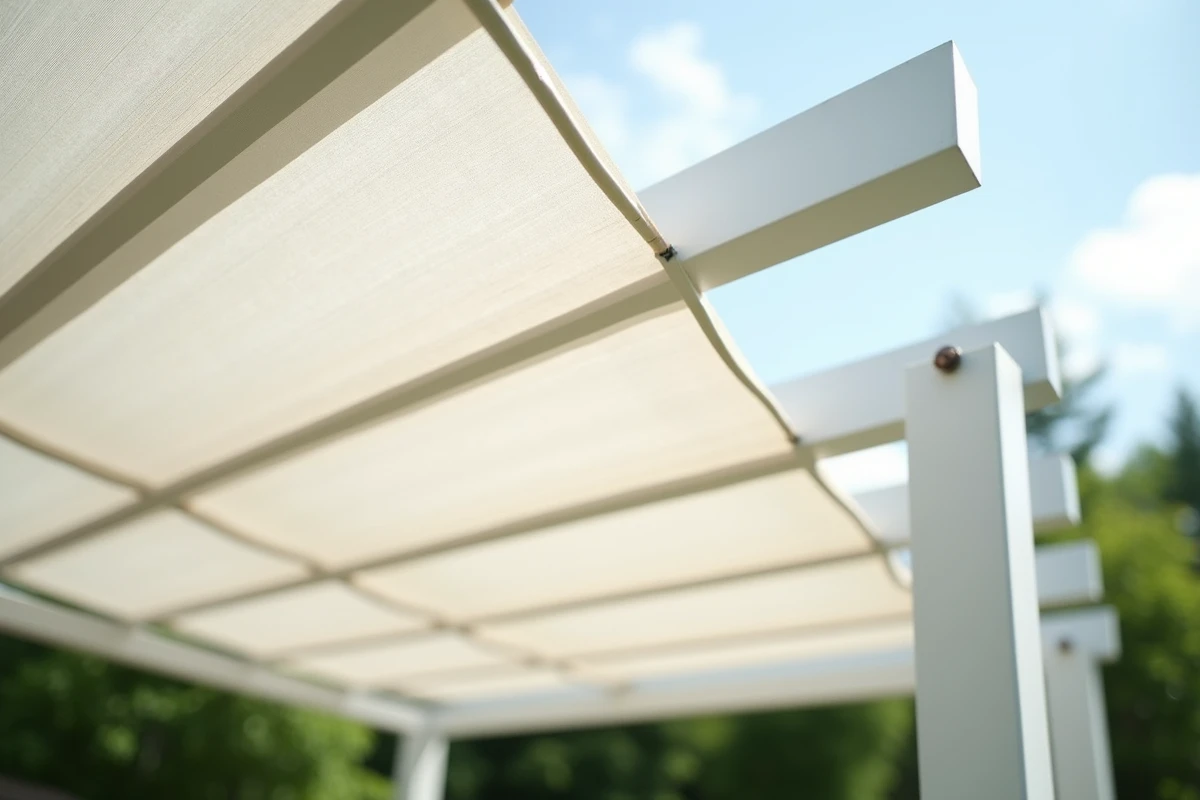
The shade of polycarbonate radically changes thermal comfort under the pergola. The CSTB details in its guide on plastic panel roofing systems (2022 edition) that opal or bronze-tinted panels transmit less heat than clear panels, at the same thickness. To go further, several anti-heat methods for polycarbonate pergolas can complement this color choice.
On a south or southwest-facing pergola, a clear panel allows a significant amount of solar radiation to pass through. An opal panel diffuses light without creating as pronounced a greenhouse effect. Feedback on this point varies depending on the chosen thickness, but the principle remains the same: the more translucent the panel, the higher the temperature rises.
If you are building the pergola or replacing the panels, now is the time to decide. The extra cost of a tinted panel compared to a clear panel is moderate, and the summer comfort gain is felt from the very first sunny day.
External blinds or shading fabric: blocking radiation before the polycarbonate
Installing a blind or shading fabric above the polycarbonate (and not below) completely changes the game. The radiation must be intercepted before it passes through the panel, otherwise the heat is already trapped.
Two main families of products work here:
- Projection or arm awnings, fixed to the supporting structure of the pergola, with a technical fabric treated for UV resistance. They are rolled up when the sky clouds over.
- Shading fabrics stretched above the roof, held by cables or masts. Less expensive, they are suitable for pergolas attached to a wall.
- Reed screens or wooden sunshades placed on the roof. A rustic solution, but it creates an air gap between the sun and the polycarbonate, which limits temperature rise.
The common point: a physical barrier is created between the sun and the panel. A fabric placed under the pergola protects from glare, but it does not reduce the heat accumulated by the polycarbonate.
Natural ventilation under polycarbonate pergola: the blind spot of closed installations
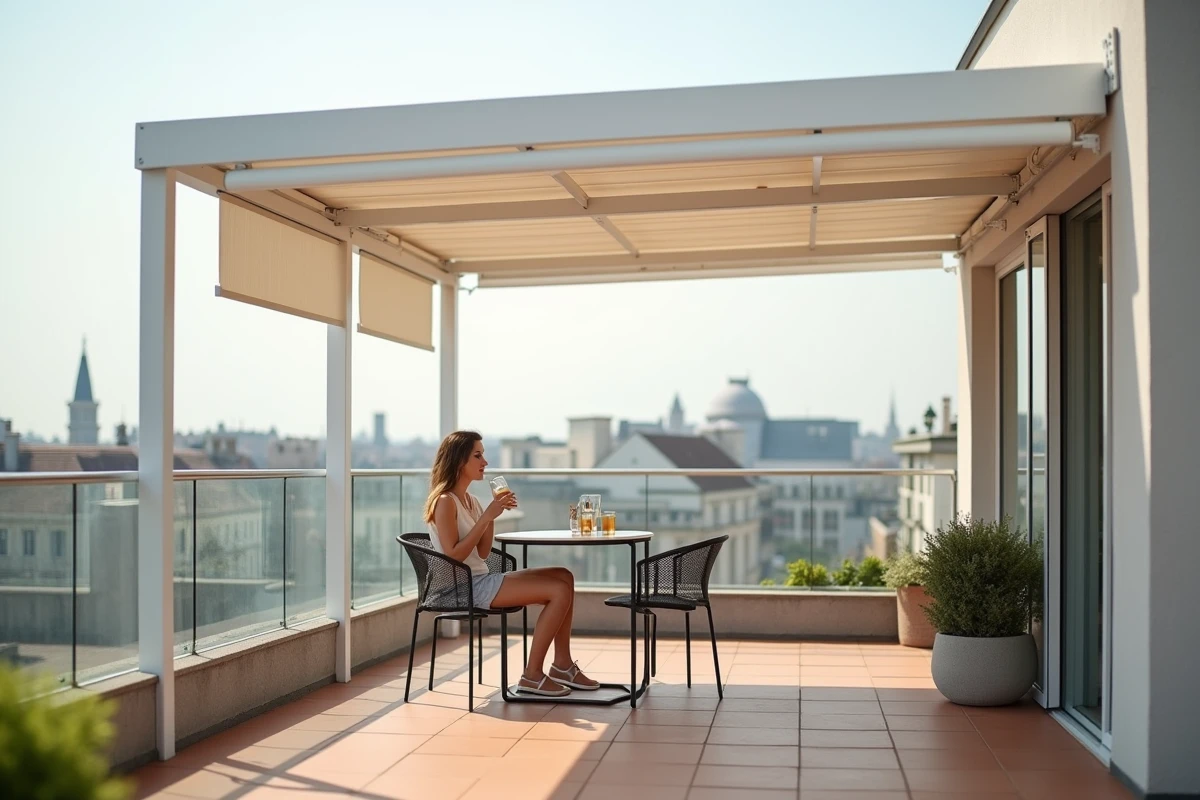
A pergola attached to a wall, with glass or semi-closed side panels, behaves like a conservatory. Warm air stagnates, and the temperature rises. Opening at least two opposite sides creates a draft that evacuates the heat accumulated under the roof.
On the ground, it is observed that pergolas with free-standing posts (without lateral filling) handle heat spikes much better than those closed on three sides. If your pergola is semi-closed, installing high openings (such as tilting transoms) allows hot air to escape by convection.
A simple tip: leave a gap of a few centimeters between the top of the polycarbonate panels and the upper beam. This void creates a natural draft that continuously evacuates overheated air.
Bioclimatic pergola with adjustable slats: replacing polycarbonate with an active system
When polycarbonate poses too many thermal problems, some homeowners switch to a bioclimatic pergola with adjustable aluminum slats. The principle is different: instead of filtering sunlight through a panel, slats are oriented to precisely control sunlight and ventilation.
The cost is significantly higher than that of a classic polycarbonate pergola. Aluminum does not transmit heat in the same way, and closed slats create total shade without a greenhouse effect. It is a replacement solution, not a complement.
This option is particularly justified when the pergola is a daily living space (outdoor lounge, summer kitchen) and thermal comfort conditions its actual use for three to four months a year.
Misting and greening: two complements that change the experience
A low-pressure misting system fixed under the pergola structure significantly lowers the perceived temperature. The water sprayed in fine droplets evaporates and absorbs ambient heat. The system works even better when air circulates freely.
On the plant side, growing a deciduous plant (vine, wisteria, star jasmine) on the structure creates a double protection: shade in summer, light in winter when the leaves fall. The plant needs two to three seasons to cover the area, but the result combines thermal insulation and aesthetics.
These two approaches are not sufficient alone if the polycarbonate is clear and the orientation is unfavorable. They work as complements to solar films or shading fabrics, not as standalone solutions.
Comfort under a polycarbonate pergola rarely relies on a single lever. The best results are achieved by combining actions on radiation (film, external blind, or tinted panel), proper ventilation, and, if the budget allows, an active misting system or adjustable slats. The choice primarily depends on the orientation of the pergola and the frequency of use during the height of summer.